- Used as a filler and coating agent to improve brightness, smoothness and printability.
- Reduces production costs by replacing expensive raw materials.
- Provides whiteness, plasticity, and strength before and after heat treatment.
- Acts as an extender and functional filler to enhance suspension and color retention.
- Controls gloss and improves durability and corrosion resistance.
- Reinforces compounds to improve strength, abrasion resistance, and mechanical properties.
- Enhances rigidity, dimensional stability, and heat resistance.
- Improves texture, flow properties, and stability in formulations.
- Absorbs moisture and Provides mild abrasive properties for skincare uses.
- Acts as a carrier and protective barrier for agricultural sprays.
- Improves workability and Reduces shrinkage and cracking in construction materials.
- Serves as a component in catalytic processes and as an additive in fertilizers.
In the medical industry, Kaolin uses to treat mild-to-moderate diarrhea, severe diarrhea, cholera, soreness, induce blood clotting in diagnostic and swelling inside the mouth caused by radiation treatments.
In the ceramics industry, Kaolin uses as an important element to manufacture porcelain.
Kaolin uses as a light-diffusing material in white incandescent light bulbs.
In the paint industry, it is utilized to extend the titanium dioxide white pigment and modify gloss levels. to increase the properties of rubber upon vulcanization.
In farming, it is Used to prevent insect damage and to stop sun-scald.
Kaolin is an element for producing facial masks or soap and also, adsorbents in the wastewater treatment process.
In the paper industry, it Serves as a paper coating process that helps to increase its gloss, smoothness & brightness as well as its printability. Moreover, Kaolin Reduces the use of tree-based resources and the cost of filler materials.
Kaolin has other uses in manufacturing cable insulation, rubber, paint, fertilizers and specialty films.
Kaolin adsorbs oil, which distinguishes its hydrophobic characteristics to the mineral surface.
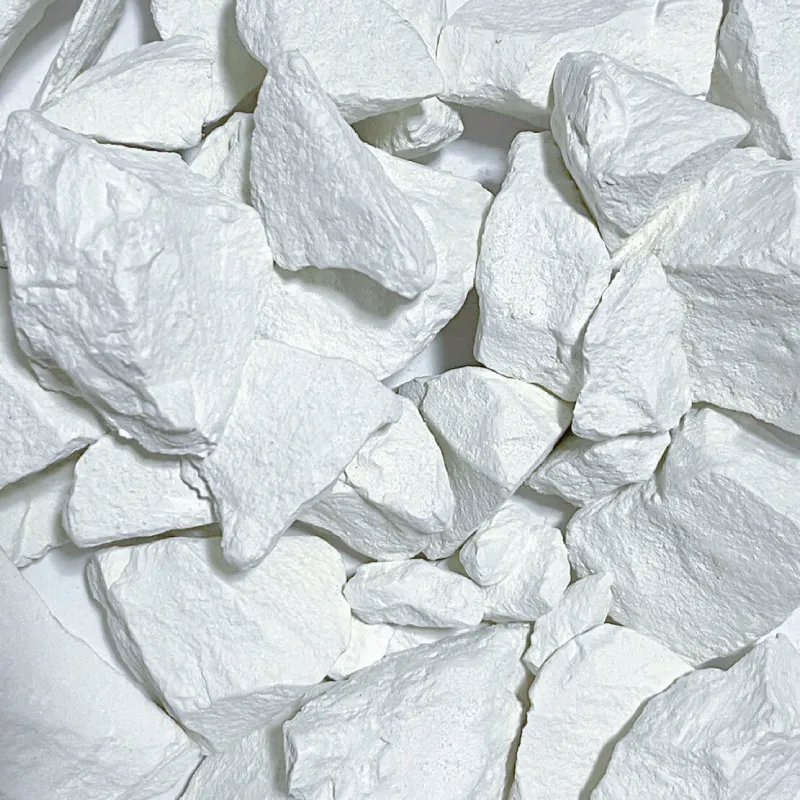
Kaolin, also known as China clay, is a naturally occurring, soft, white clay mineral composed mainly of kaolinite. It is formed through the chemical weathering of aluminum silicate minerals like feldspar. Kaolin is highly valued for its fine particle size, chemical inertness, whiteness, and plasticity.
It is widely used across various applications due to its properties such as high brightness, low abrasiveness, good insulating characteristics, and the ability to retain its structure under heat. Kaolin can be used in its natural form or processed to enhance specific qualities for industrial uses.
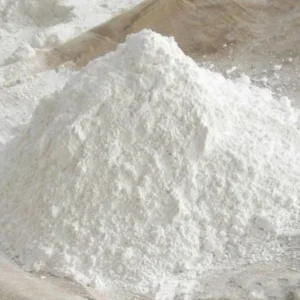
Typically available as a dry powder, slurry, or granules, Kaolin finds application in manufacturing, construction, agriculture, cosmetics, and other specialized sectors.
Chemical Formula: Al2H4O9Si2
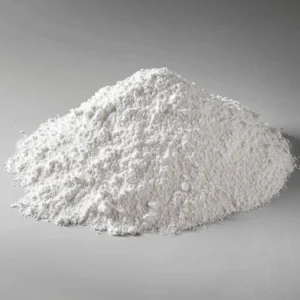
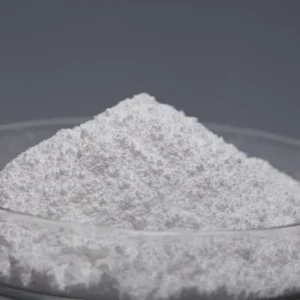
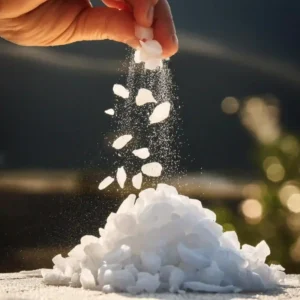
Kaolin is a soft, odorless white to yellowish or grayish powder and plastic clay mainly produced by fine-grained plate-like particles. It is also known as China Clay or Clay Kaolin. The kaolin word derives from the Chinese name and means high ridge. It is produced by mixing kaolinite and other different minerals such as quartz, muscovite, anatase, and feldspar.
It is chemically static, non-abrasive, and has low electricity and heat conductivity. It is an essential additive in the mass-produce of china porcelain and china. It is significantly used in the making of rubber, paper, drying agents, and paint. It is insoluble in water but develops an earthy smell when wet.
Kaolin becomes plastic when mixed with it in a range of 20% to 35%. It is different from other industrial clays based on its excellent particle size and pure coloring. Its property to disperse in water makes it a complete pigment.
Kaolin’s white color can either be naturally arisen or can come out after processing which removes minerals and other color compounds. It is found in the entire world, deposits with suitable whiteness, viscosity, and other characteristics are rare.