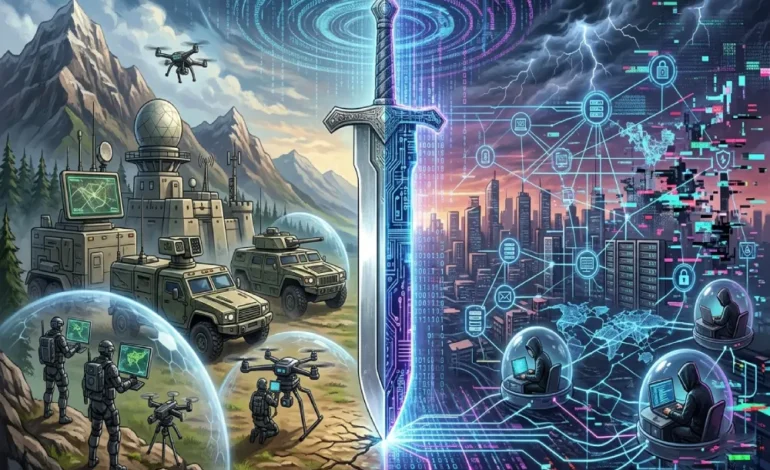
The Double-Edged Sword: Modern Défense and the Digital Dilemma

In the modern era, technology has transitioned from being a tool for convenience to the very fabric of our survival and social structure. However, this advancement is a “debatable topic,” as your notes suggest. Whether we are looking at the terrifying precision of hypersonic missiles or the subtle addiction of the smartphone in our pockets, we are living in an age where the “rate of growth is fast compared to old times,” and the consequences are more profound than ever before.
1. The New Frontier of Physical Warfare
The landscape of global defence has shifted from traditional land invasions to high-tech, invisible, and lightning-fast engagements. We are no longer just talking about “fast-paced guns”; we are entering the era of Hypersonic Technology.
- Speed as a Weapon: Hypersonic missiles, capable of traveling at speeds exceeding Mach 5 (over 3,800 mph), have rendered traditional missile defence systems nearly obsolete. As of 2026, global powers like Russia and China have already fielded operational units, while the U.S. has invested over $15 billion in the last three years to catch up.
- The Iron Dome & Drone Tech: Modern defence is increasingly automated. Systems like the Iron Dome use sophisticated algorithms to intercept short-range rockets with a success rate of over 90%. Similarly, drone technology has transformed “mobile bombs” into precision-guided tools that can be operated from thousands of miles away.
- Rising Budgets: Your observation that “defence budgets have increased” is backed by staggering data. In 2025, global military spending hit a record $2.63 trillion. This reflects a world where nations are prioritizing “Satellite Warfare” and “Space-based Capabilities” to secure their borders from above.
2. Psychological Warfare: The Battle for the Mind
Perhaps more dangerous than physical weapons is what your notes call “Mental Destruction” or “Psychological Warfare.” Technology is now used to disrupt governments and create “panic situations” without firing a single shot.
- Disinformation & Polarization: Using AI-driven deepfakes and psychological profiling, bad actors can “ignite aversion among different religions” or political groups.
- Cognitive Manipulation: In 2026, the World Economic Forum identified “Information Disorder” as a top global risk. By using social media algorithms to trigger anger and resentment, technology is being used to erode social cohesion from the inside out.
3. The Cell Phone Paradox: A Necessity or a Waste?
The most relatable example of this “good use vs. bad use” struggle is the device in your hand: the smartphone. While it has become a “necessity,” the statistical reality of how we use it is sobering.
The Statistics of Distraction (2026 Data)
| Category | Statistic |
| Average Global Screen Time | 6 hours and 54 minutes per day. |
| Gen Z Average | Approximately 9 hours per day. |
| Mental Health Impact | 37% of adults report social media negatively affects their mental health. |
| Productivity Loss | Frequent notifications can cause a 40% drop in productivity due to “task switching.” |
As noted, we spend most of our time on “social media tools and games” that are essentially “eating our time.” We are caught in a loop of short-form content like TikTok or Reels which studies have linked to decreased attention spans and increased anxiety.
4. The Untapped Potential: Health and Wellness
The tragedy of modern technology is not its existence, but our “hardly used” engagement with its beneficial sides. There are “thousands of applications” designed for self-improvement that remain neglected on our home screens.
- Digital Health Growth: The “mHealth” (mobile health) market is projected to reach $45 billion in 2026. These apps offer health monitoring, yoga, and “smart time savers.”
- The Gap: Despite the availability of tools that can track heart rate, sleep cycles, and caloric intake with medical-grade accuracy, the average user spends less than 5% of their total screen time on health or educational apps.
Conclusion: Choosing the Path Forward
Technology is inherently neutral; it is a mirror of human intent. As your notes conclude, “instead of good use, bad use of technology is more.” This is visible in the way we’ve militarized the heavens and the way we’ve allowed our minds to be colonized by digital distractions.
To bridge the gap, we must shift our focus. We must move away from the “physical and mental destruction” of warfare and mindless scrolling, and toward the “useful applications” of health, connectivity, and education. The tools for a better life are already in our pockets we simply have to choose to use them.